EMS Pilates is one of the most talked-about fitness innovations of the past few years — and honestly, the hype is deserved. It fuses electrical muscle stimulation (EMS) technology with traditional Pilates movements to create a workout that activates up to 90% of your muscle fibers simultaneously. That’s not something a standard mat class can replicate.
If you’ve been curious about what is EMS Pilates exactly, here’s the short version: it’s a method where low-frequency electrical impulses are delivered through a specialized suit or electrode pads while you perform controlled Pilates exercises. The result is a deeper, more intense muscular contraction than voluntary effort alone can produce.
This guide breaks down the science, the benefits, and everything you need to know before trying it — including how it compares to regular Pilates. Whether you’re a Pilates regular or completely new to it, you’ll walk away with a clear picture of whether this method fits your goals.
Table of Contents
- What Is EMS Pilates?
- How Does EMS Pilates Work?
- 7 Key EMS Pilates Benefits
- EMS Pilates vs Regular Pilates: Key Differences
- Who Is EMS Pilates Best For?
- What to Expect in an EMS Pilates Session
- Safety Considerations and Limitations
- Realistic Results Timeline
- Frequently Asked Questions
What Is EMS Pilates?
EMS Pilates is a hybrid fitness method that combines Electrical Muscle Stimulation (EMS) technology with Pilates-based movements. The EMS component sends controlled electrical impulses to your muscles, forcing deeper contractions during each Pilates exercise. This amplifies the training effect well beyond what standard movement alone achieves.
The concept grew out of two well-established fields. Electrical muscle stimulation has been used in physical therapy and rehabilitation since the 1960s. Pilates, developed by Joseph Pilates in the early 20th century, focuses on core strength, flexibility, and controlled movement patterns. Combining the two creates a layered training stimulus that hits muscular endurance, strength, and neuromuscular coordination at once.
Think of it this way: regular Pilates asks your muscles to work. EMS Pilates forces them to work harder — even the ones your brain typically neglects to recruit.

The Science Behind EMS Technology
EMS works by mimicking the body’s own neural signals. Your nervous system sends electrical impulses to trigger muscle contractions. An EMS device replicates this process externally, using frequencies typically between 20–85 Hz to stimulate both slow-twitch and fast-twitch muscle fibers simultaneously.
According to a 2017 study published in the Journal of Strength and Conditioning Research, whole-body EMS training produced significant improvements in muscle strength and body composition over a 12-week period. That’s meaningful data — not just marketing language.
What makes EMS Pilates distinct from standalone EMS training is the intentional movement layer. You’re not just passively receiving stimulation while sitting still. You’re actively performing Pilates exercises — teasers, roll-ups, single-leg stretches — while the electrical impulses amplify every contraction.
How Does EMS Pilates Work?
How does EMS Pilates work? The process combines a wearable EMS device (either a full-body suit or targeted electrode pads) with a structured Pilates session guided by a trainer. The EMS unit is synchronized with your movements, intensifying muscle activation throughout the entire session.
Here’s a step-by-step breakdown of a typical EMS Pilates session:
- Suit Up: You put on a moisture-activated EMS garment or have electrode pads placed on target muscle groups — typically core, glutes, thighs, and back.
- Warm-Up Calibration: The trainer adjusts the EMS device’s intensity levels for each muscle group. This takes 5–10 minutes and ensures the stimulation is effective but comfortable.
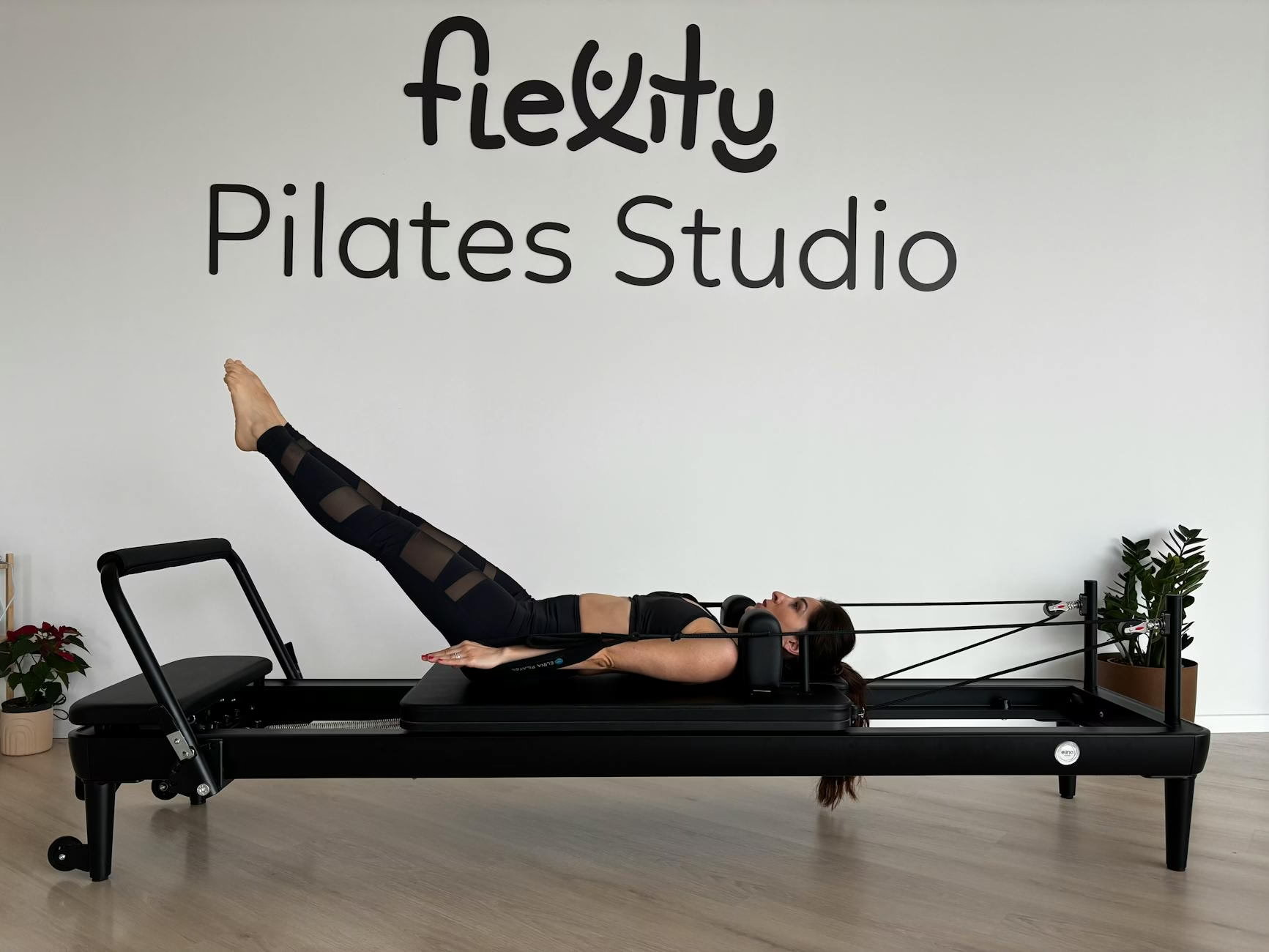
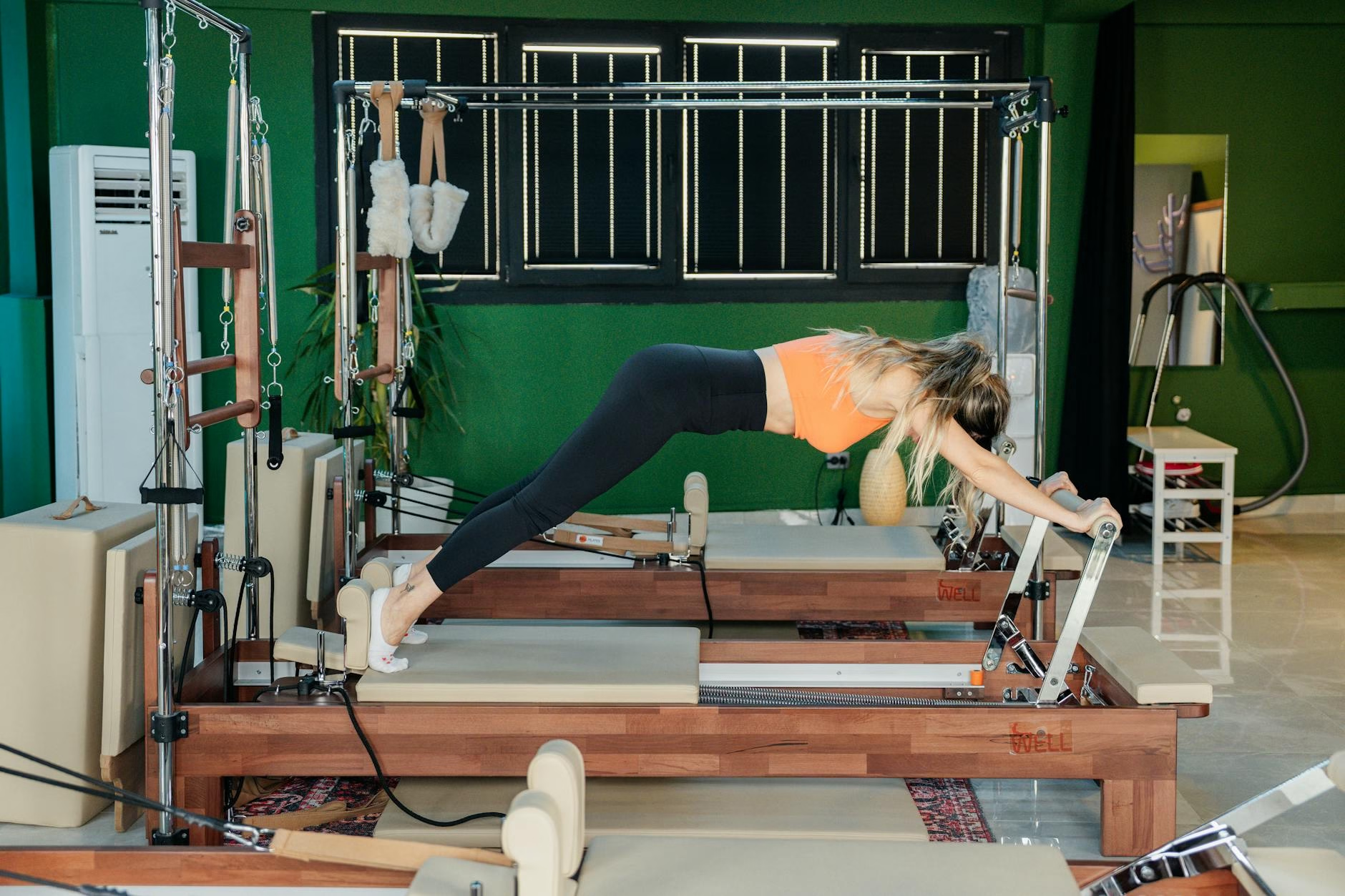
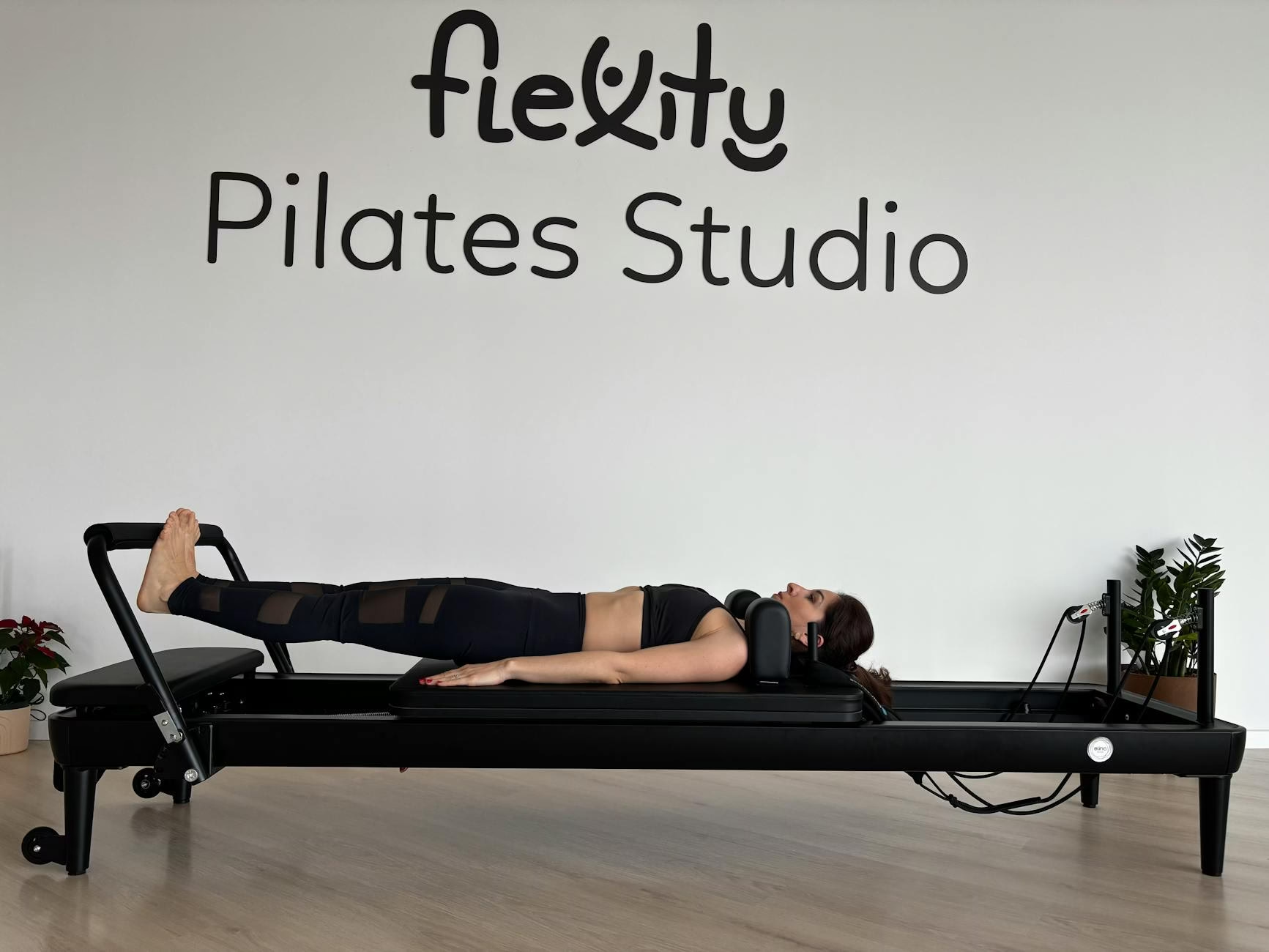
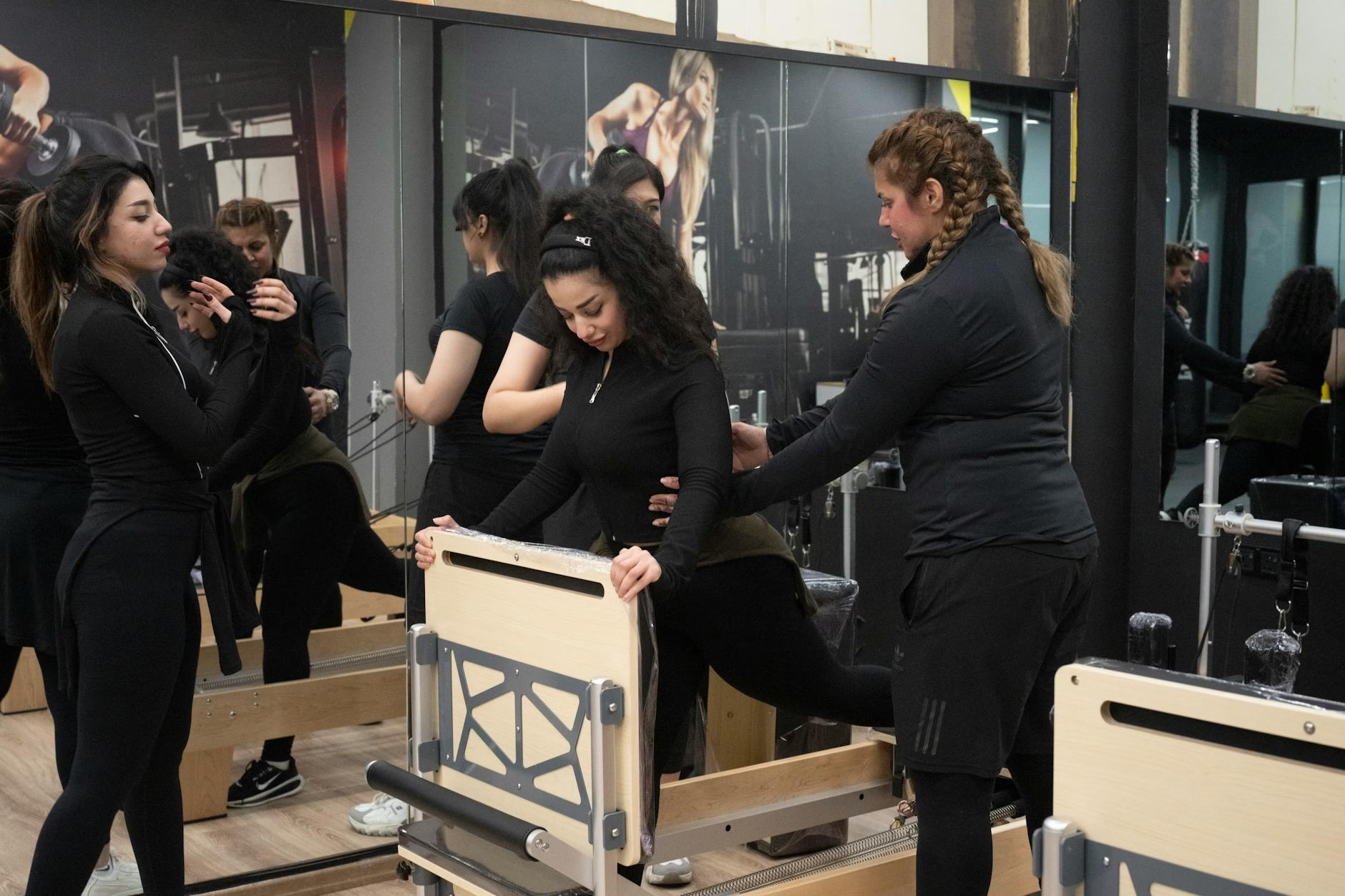
- Guided Pilates Sequence: You perform a series of Pilates movements — mat-based or on a reformer machine — while the EMS system activates. Sessions typically run 20–30 minutes.
- Progressive Intensity: As you adapt, the trainer gradually increases the EMS frequency or the complexity of the Pilates movements to maintain progressive overload.
- Cool-Down: The session ends with lower-intensity movements and gradual reduction of the EMS signal to let muscles recover properly.
The 20-minute session length isn’t arbitrary. Because EMS recruits so many more muscle fibers than regular exercise, the metabolic demand is much higher. Staying in that state longer risks overtraining and unnecessary soreness.
Understanding Muscle Recruitment in EMS Pilates
During a standard workout, your body typically recruits 30–40% of available muscle fibers. EMS bypasses the neuromuscular fatigue threshold, pushing recruitment to as high as 90%. That gap is exactly where EMS Pilates finds its advantage over conventional training.
Pilates movements already demand significant neuromuscular control. Add EMS into the equation, and you’re essentially running two training systems in parallel. The Pilates component ensures the movements are purposeful and aligned. The EMS component ensures the muscles responding to those movements are working at maximum capacity.
When you combine the precision of Pilates with the deep muscle activation of EMS, you’re not just working harder — you’re working smarter. Muscles that conventional training rarely reaches become fully engaged, which changes the body composition outcome entirely.
Journal of Sports Science and Medicine, Whole-Body EMS Training Research, 2022
7 Key EMS Pilates Benefits
The EMS Pilates benefits span well beyond simple calorie burn. Here’s what the evidence — and real-world results — actually shows:
1. Dramatically Higher Muscle Activation
Standard Pilates recruits roughly 30–40% of muscle fibers. EMS Pilates pushes that to 80–90%, according to research from the European Journal of Applied Physiology. You engage deep stabilizer muscles — the multifidus, transverse abdominis, pelvic floor — that most people literally cannot consciously activate through movement alone.
2. Faster Results in Less Time
A single 20-minute EMS Pilates session is often compared to 90 minutes of conventional gym training in terms of muscular work output. For anyone juggling a full schedule — which, let’s be real, is most of us — that efficiency is hard to ignore.
3. Core Strength and Postural Improvement
Pilates has always been known for building core strength. EMS amplifies this by ensuring the deep spinal stabilizers are fully activated during every movement. Over time, this translates to significantly better posture, reduced lower back pain, and improved spinal alignment — benefits that show up in your daily life, not just in the studio.
4. Body Composition Changes
According to a study in the Journal of Physical Therapy Science, whole-body EMS training significantly reduced waist circumference and body fat percentage in sedentary adults over 12 weeks. Pair that metabolic demand with Pilates movement patterns, and the body sculpting potential is substantial. You can also learn more about this combination in Reshape’s guide to the best full-body workout combining EMS and Pilates.
5. Rehabilitation and Injury Recovery
EMS was originally developed for physical therapy. When layered with low-impact Pilates movements, it becomes a powerful tool for rebuilding strength around injured joints without placing excessive load on connective tissue. Many physiotherapists now integrate EMS with corrective exercise protocols — which is essentially what EMS Pilates is doing in a fitness context.
6. Reduced Joint Stress
Here’s the thing: traditional strength training builds muscle, but it puts significant compressive load on your joints. EMS Pilates achieves comparable muscular stimulus without heavy external loads. That makes it especially valuable for people with osteoarthritis, post-surgical recovery needs, or anyone who’s been sidelined by joint pain.
7. Improved Metabolic Rate
Building lean muscle mass increases your resting metabolic rate. Because EMS Pilates activates more muscle fibers than conventional training, it promotes greater muscle hypertrophy stimulus per session. The downstream effect? Your body burns more calories even at rest. It’s a compounding benefit that strengthens the case for consistency over time.
For those interested in combining this with other body sculpting approaches, Reshape also offers reformer Pilates paired with EMS slimming treatments for an even more targeted result.
EMS Pilates vs Regular Pilates: Key Differences
The EMS Pilates vs regular Pilates debate comes down to depth, efficiency, and goals. Regular Pilates is a well-proven method for flexibility, core conditioning, and mindful movement. EMS Pilates builds on all of that but adds a layer of intensity that fundamentally changes the training outcome.
| Factor | Regular Pilates | EMS Pilates |
|---|---|---|
| Session Duration | 45–60 minutes | 20–30 minutes |
| Muscle Fiber Recruitment | 30–40% | 80–90% |
| Core Activation | High (surface + deep) | Very High (deep stabilizers emphasized) |
| Caloric Burn Per Session | 150–250 kcal | 300–500 kcal (estimated) |
| Joint Stress | Low | Very Low |
| Equipment Required | Mat or Reformer | EMS suit/pads + mat or Reformer |
| Learning Curve | Moderate | Moderate (plus EMS calibration) |
| Ideal For | General fitness, flexibility, rehab | Body sculpting, time efficiency, deeper strength |
Real talk: regular Pilates isn’t “worse.” It’s a different tool. If your goal is mindfulness, breath work, and gentle conditioning, classical Pilates delivers beautifully. But if you want faster body composition changes, deeper muscle activation, and training that fits into a packed schedule, EMS Pilates is the stronger choice.
Who Is EMS Pilates Best For?
Not every fitness method suits every person, and EMS Pilates is no exception. But it has a surprisingly broad application range. Here’s who tends to benefit most:
- Busy professionals who can’t commit to 60-minute gym sessions five days a week
- Post-rehabilitation clients rebuilding strength after surgery or injury with minimal joint loading
- Intermediate-to-advanced Pilates practitioners who’ve plateaued and need a new stimulus
- People recovering from postpartum who need pelvic floor and deep core reactivation
- Athletes using it as supplemental training to address muscular imbalances
- Anyone seeking body sculpting results without high-impact or heavy-load training
That said, it’s not for everyone. People with pacemakers, implanted electronic devices, active infections, or certain cardiovascular conditions should not use EMS technology. Always consult a qualified professional before starting.
What to Expect in an EMS Pilates Session
Walking into your first EMS Pilates session can feel a little intimidating — the suit looks like something from a sci-fi film, honestly. But the actual experience is more grounded than it appears.
You’ll typically wear either a full-body EMS suit with built-in electrode channels, or have pads strapped to your arms, core, and legs. The suit gets slightly dampened with water to improve conductivity. Then the trainer sets the stimulation level — usually starting low and increasing as your body adjusts.
The Pilates exercises themselves are familiar: controlled breathing, precise movement, and intentional core engagement. What changes is the sensation. You’ll feel your muscles working at a depth that’s noticeably different from regular training. Some describe it as a buzzing or pulsing sensation that intensifies during the muscle contraction phase of each movement.
Sessions run 20–30 minutes. Most people feel pronounced muscle fatigue within the first 10 minutes. That’s normal — and it’s the point.
Post-Session Recovery
Expect soreness. Specifically, expect the kind of deep muscular soreness — Delayed Onset Muscle Soreness (DOMS) — that usually kicks in 24–48 hours after your session. It’s often more pronounced than what you’d feel after a standard Pilates class, which is direct evidence of the higher muscle fiber recruitment at work.
Most studios recommend a minimum of 48 hours between EMS Pilates sessions to allow full muscular recovery. Starting with once per week is common for beginners, progressing to twice weekly as your body adapts. For those exploring complementary treatments, Reshape’s EMS slimming treatment pairs effectively with a Pilates training program.
Safety Considerations and Limitations
EMS Pilates is safe when practiced correctly with qualified supervision. But there are real limitations and contraindications worth knowing before you commit.
- Absolute contraindications: Pacemakers or implanted defibrillators, epilepsy, pregnancy, active malignant tumors, acute inflammatory conditions, open wounds near electrode sites
- Relative contraindications: Cardiovascular disease (requires medical clearance), herniated discs (needs physiotherapy guidance), metal implants near electrode placement areas
- Overtraining risk: Because EMS recruits so many muscle fibers, excessive frequency without adequate recovery can lead to rhabdomyolysis — a condition where muscle breakdown releases proteins into the bloodstream that can damage kidneys
The rhabdomyolysis risk sounds alarming, but it primarily occurs when people use EMS at very high intensities without proper progression, or train daily without rest. Following a structured program under qualified supervision makes this risk minimal.
EMS training is highly effective but demands respect for recovery. The biggest mistake new users make is assuming that because sessions are short, they can train daily. The muscular load per session is fundamentally different from conventional exercise — recovery windows must match that reality.
European Health and Fitness Association (EHFA), EMS Training Position Statement
Realistic Results Timeline
One of the most common questions about EMS Pilates benefits is: how fast will I see results? Honest answer — it depends on your baseline, consistency, and what results you’re measuring.
Here’s what a realistic progression generally looks like:
- Weeks 1–2: Increased muscle awareness, notable soreness, improved neuromuscular connection. Most people feel their core and glutes working in ways they haven’t before.
- Weeks 3–6: Visible improvements in muscle tone, posture, and functional strength. Body measurements often show modest but consistent reduction in waist and hip circumference.
- Weeks 7–12: Significant body composition changes become measurable. Lean muscle mass increases, body fat percentage decreases, and the deep core strength developed translates to better performance in other activities.
According to a 2020 meta-analysis in the International Journal of Environmental Research and Public Health, consistent whole-body EMS training over 12 weeks produced an average reduction of 2.3 cm in waist circumference and a 1.7% decrease in body fat percentage in previously untrained adults. These numbers may seem modest in isolation, but they compound meaningfully when combined with good nutrition and consistent training.
Real talk: EMS Pilates isn’t magic. No workout method is. What it offers is a genuinely more efficient pathway to muscle activation and body sculpting than standard approaches — and that efficiency matters when your time is limited. You can explore more about how EMS-based approaches work at Reshape’s EMS body sculpting program.
If you’re also exploring non-exercise body sculpting methods alongside your training, Reshape’s guide to exercises for belly fat versus Cryo Slim treatments is worth a read for context on combining approaches.
Frequently Asked Questions
What is EMS Pilates and how is it different from regular EMS training?
EMS Pilates specifically pairs electrical muscle stimulation with Pilates movements — controlled, low-impact exercises focused on core stability, alignment, and flexibility. Regular EMS training may involve any movement pattern, including strength training or cardio intervals. The Pilates component adds precision, breath work, and postural correction that generic EMS training doesn’t inherently include.
How many EMS Pilates sessions do I need per week?
Most professionals recommend 1–2 sessions per week, with at least 48 hours of recovery between sessions. This recovery window is non-negotiable — EMS activates significantly more muscle fibers than conventional training, and muscles need adequate time to repair and adapt. Beginners should start with once weekly for the first month.
Is EMS Pilates good for weight loss?
Yes, EMS Pilates benefits include meaningful support for weight loss goals, primarily through increased lean muscle mass (which raises resting metabolic rate) and elevated caloric expenditure per session. However, it works best as part of a broader approach that includes nutritional awareness. EMS Pilates alone won’t outrun a poor diet.
Can beginners do EMS Pilates?
Absolutely. The EMS intensity is always calibrated by the trainer to the individual’s fitness level and tolerance. Beginners typically start at lower stimulation frequencies and progress gradually. The Pilates movements are also scalable — modifications exist for every exercise. What matters most is working with a qualified instructor who understands both EMS parameters and Pilates technique.
Does EMS Pilates hurt?
It shouldn’t hurt during the session. The sensation is typically described as a strong pulsing or buzzing in the muscles — intense but not painful. Post-session DOMS (muscle soreness 24–48 hours later) can be significant, especially after your first few sessions. This is normal and indicates the deeper muscle fiber recruitment doing its job.
How does EMS Pilates compare to reformer Pilates?
Reformer Pilates uses spring resistance on a specialized machine to add load to Pilates movements. EMS Pilates adds electrical muscle stimulation instead of — or sometimes in addition to — external resistance. Both deepen the training stimulus beyond mat Pilates. EMS Pilates tends to produce greater metabolic demand; reformer Pilates offers more load variety and movement range. Many practitioners use both methods together for optimal results.
The bottom line? EMS Pilates isn’t a trend that’s going to fade quietly. It sits at the intersection of sports science, rehabilitation principles, and time-efficient training — and that’s a combination that only gets more relevant as people demand better results from shorter workouts. If you’ve been on the fence, the evidence makes a compelling case for at least trying it. Your deep core muscles have been waiting for this challenge.
Ready to experience it yourself? Explore Reshape’s full range of body sculpting and fitness programs to find the right approach for your goals.